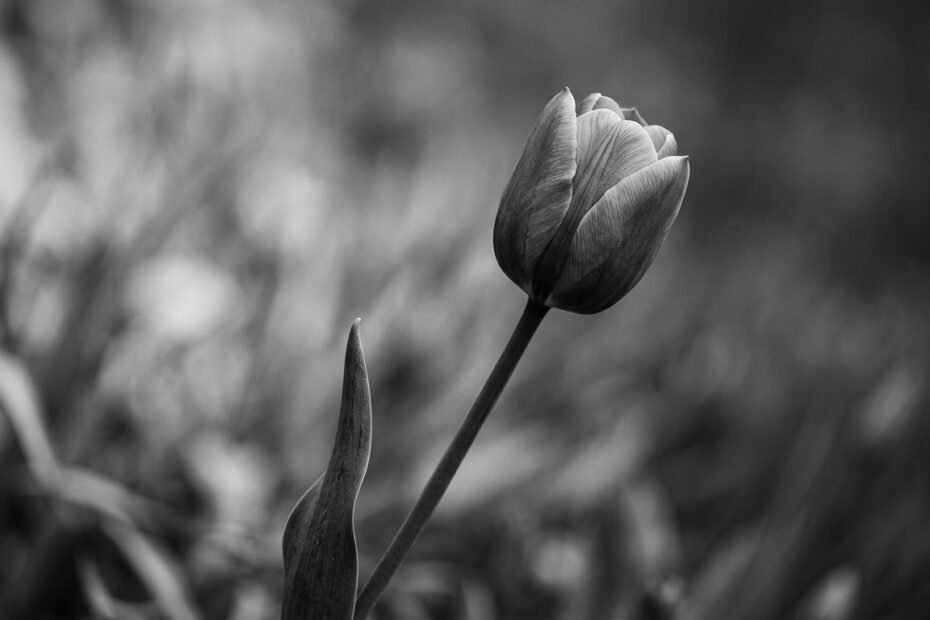
We always associate flowers with something: the rose with passion, the lily with purity, the sunflower with light. The tulip, with its slender stem, leaves resembling weeds, and half-closed flower concealing God knows what mystery within, is not so easily defined. It appears, reaches its fullness, and suddenly disappears, moving through time. It announces the transformation of the earth after winter, and there are historical references to its extraordinary diversity.
At times, we see it depicted in ceramics, textiles, manuscripts, and architectural ornaments. One period even came to be known as the Tulip Era. Closed, open, or without petals, it remains a tulip. Do we ever stop being who we are? Its symbolic power lies in accepting the limited duration of things. When it dies, it becomes a brief repository of time, preventing the end from turning what happened into something insignificant.
For me, the tulip is a journey between the tangible and the intangible, a challenge to the laws of time and space, a symbol of the invisible, the forgotten, and what is reconfigured across infinite parallel dimensions.
References
Contino, L. (2025). The Path of Tulips.