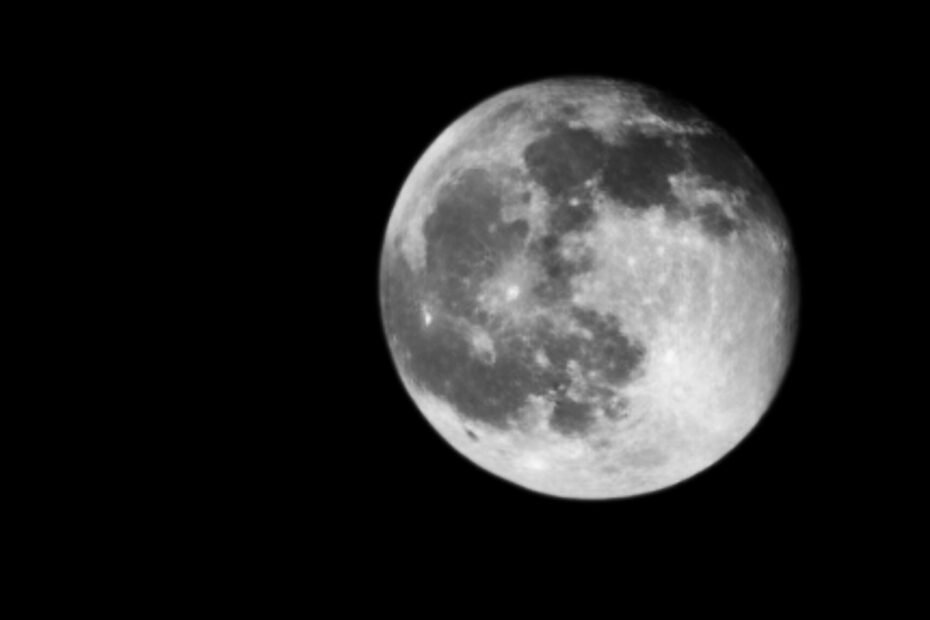
I raise my eyes to the sky and find the moon suspended in the darkness. Something within me responds. I, too, grow, reach my fullness, wane, disappear, and return. She is always the same, viewed from different places. Unlike the sun, she produces no light of her own and, seen from another perspective, could be a mirror of identity and the mystery of what lies hidden.
In many cultural traditions, the moon has been associated with the feminine, fertility, natural cycles, and intuition. These associations are part of a symbolic imagination that has influenced art, literature, and spirituality. Her femininity has neither appearance nor stereotypes. She can also symbolize a relationship with cyclical time.
Depending on the context, she may represent romance, solitude, nostalgia, freedom, or transformation. In literature, she may be part of a farewell; in painting, she may balance a composition or introduce tension between light and darkness; in photography, she may evoke distance, contemplation, or a beauty beyond our reach.
As an aesthetic concept, the moon invites us to explore contrast. Her visual universe can be expressed through silvery tones, deep blacks, soft whites, and textures reminiscent of stone, dust, or the surface of an antique mirror.
The moon offers a way of understanding existence. We are moved by her remoteness even as she accompanies us; she pretends to light the way, and some seek guidance in her phases.
Do any of our forms define us?
References
Contino, L. (2025). The Sepulcher of the Wolves.