According to Schunk (2020), learning is an enduring change in behavior, or in the capacity to behave in a given fashion, which results from practice or other forms of experience. As a Translation professor I have been able to observe the change in the behavior of translation students from day one until they finish their preparation and become Translators. Every translator must be aware of the theoretical foundations that govern Translation Science (especially the most recent ones, since translation studies are nourished by the accumulation of previous experiences, which avoid making beginners’ mistakes). That is why practice and experience are a key element in learning Translation techniques.
On the first day of class students are usually asked to translate a text and this translation is analyzed. Variants are proposed to improve this translation and from that moment they begin to understand that the change that must occur in their way of translating is not only necessary, but essential. This change must also not have setbacks, but continue to evolve progressively over time and this will only be achieved through practice and experience. Rationalistic learning theory states that knowledge comes from the mind. This is valid up to a certain point, since temporary knowledge comes from the mind, however, permanent and constantly evolving knowledge comes from experience and practice, as empirical learning theory affirms.
According to Titchener (1909), the mind is composed of associations of ideas and to study the complexities of the mind, one must break down these associations into single ideas. This structuralist learning theory is not useful in Translation classes, since students should be taught to see the whole picture, and not to compartmentalize information. Languages are complex structures and transferring ideas from one complex structure to another takes a level of abstraction and capture of the whole context in general.
The functionalist theory was more successful in this sense because it opposed the isolation of phenomena, but still, its weaknesses gave way to the behavioral theory, which is based on the observation of behavior and the principle that it can be modified. There is no doubt that the behavioral theory offers a partial explanation of how a language is learned since it sees learning as a sum of habits. However, in Translation, it does not respond to more complex and abstract aspects such as, for example, the creative capacity of language (translators create new sentences that are not the product of imitation).
As for cognitive theories, meaning is the cornerstone of Translation, it is not in the signals that are transmitted, but in the brains of those who communicate. Language is, therefore, part of cognition, a mental faculty that interacts with the rest. Mental states (thoughts, beliefs, desires, motivations) are not a product, but complex interactions of various functional mental processes. Also, these processes do not have a unified or stable nature, so, rather than as states, we should see them as processes or situations.
It is important to understand that the translator does not retain as a photocopy what a given source text means. The translator constructs the meaning subjectively based on their mental schemes (previous experience with similar texts, theoretical learning, their own conclusions, etc.), which he transforms and rewrites, reformulating the text in the target language and depending on the recipient of the text. Cognitive studies of Translation are a very interesting niche for providing applied knowledge and, in this way, facilitating the learning of translation.
Also, there is something very interesting that I would like to share. As a translation professor for many years, I have always observed that students have certain tendencies when it comes to translating. Some students translate literally, others go too far from the original text and restate it in their own way, others tend to summarize the original text and restate it with fewer words, while others tend to explain too much the idea they are trying to translate.
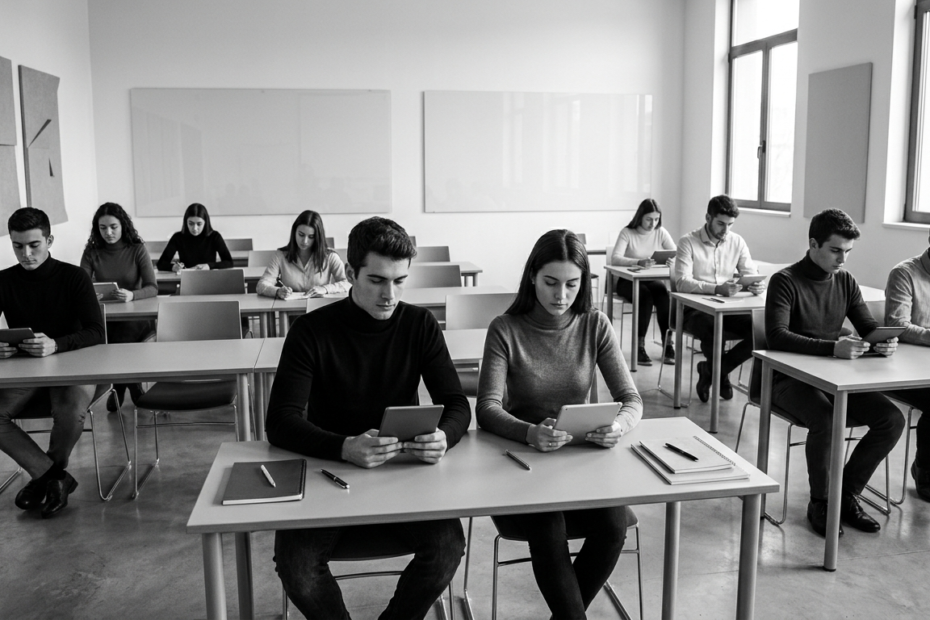
Translation lessons are focused on giving students the basic tools to translate certain types of texts, but most of the time teachers do not work on controlling the tendencies of each student (due to lack of time or maybe because these very different students are in the same classroom all together). However, if the students, although they were in the same classroom, were seated in groups, according to their tendencies when translating, we could personalize the teaching a little more and polish the imperfections of each one in a more successful way.
I have always wondered what makes students have certain tendencies when it comes to translating. According to Kolb (2014), there are 4 learning styles: accommodator, assimilator, converger, and diverger. The concept of how each person learns seeks to understand how people, through their own experiences, generate concepts, rules and principles, adapting to new situations and modifying concepts to increase the effectiveness of their decision-making.
Translating is precisely that, a constant decision-making on how to re-express an idea in another language. I was thinking that when students start studying Translation, an introspection test can be used to determine the learning style of each one. Once this has been determined, they may be given an extensive 5-page text to translate. The students’ tendencies when translating could be analyzed in comparison with the results of the learning style introspection test, to see if there is any kind of relationship between the students’ way of translating and their learning style.
The results of the introspection test could help the teacher to recognize the strengths and weaknesses of each student, and the methodology in the teaching of Translation could be approached differently (it could be more personalized). The teacher would know which resources to take advantage of in favor of the students, and which ones he should reinforce.
References
Kolb, D. (2014) Learning style inventory V3.1, Hay Group Publisher.
Schunk, D. (2020) Learning theories: an educational perspective, 8th ed. Pearson.
Titchener, E. (1909) Lectures on the experimental psychology of the thought processes. New York: Macmillan.